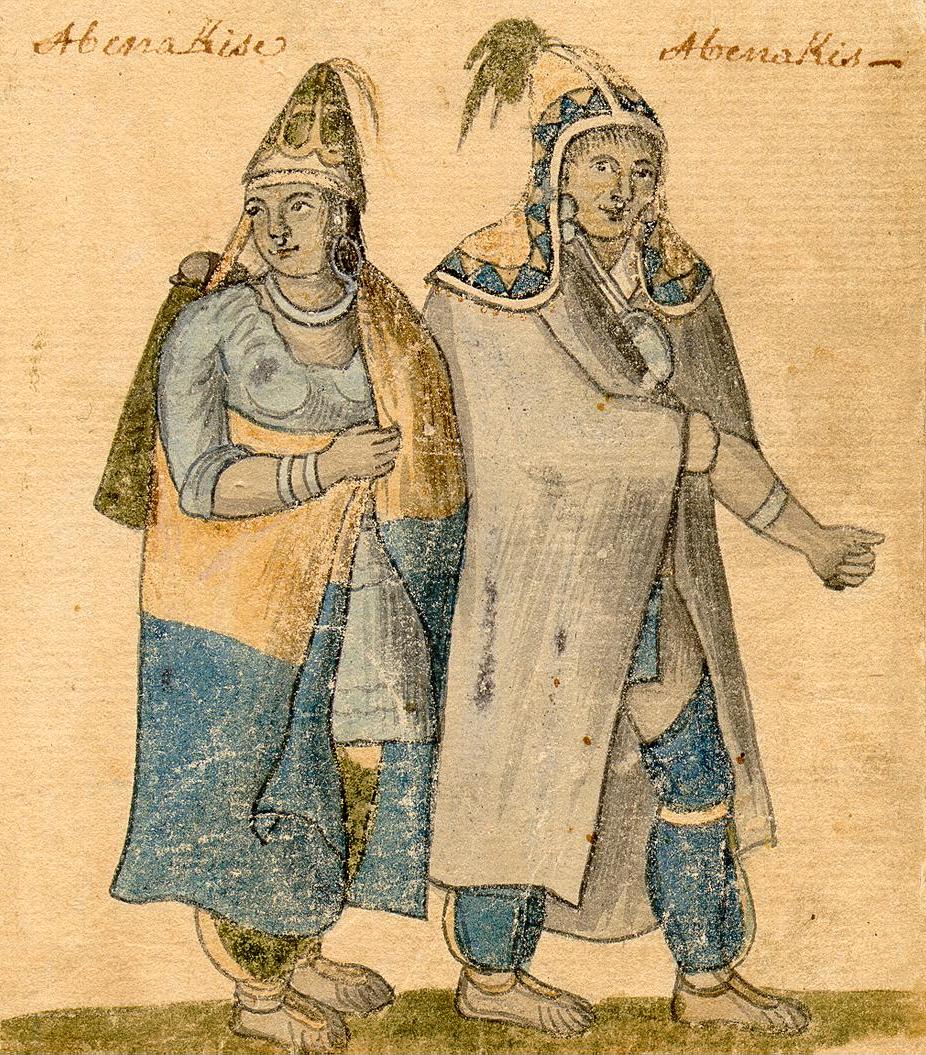
Abenaki people
Indigenous people of the Northeastern Woodlands of Canada and the US
Press Enter · cited answer in seconds
0 sources
Summary
Abenaki people is an ethnic group[1]. It ranks in the top 6% of ethnic group entities by monthly Wikipedia readership (3,919 views/month).[2]
Key Facts
- Religion or worldview: Abenaki mythology[3], Christianity[4]
- Country: United States[5], Canada[6]
- Instance of: Native Americans in the United States[7], indigenous peoples in Canada[8]
- Subclass of: indigenous peoples of North America[9]
- Part of: First Nations[10], Indigenous peoples of the Northeastern Woodlands[11]
- Commons category: Abenaki[12]
- Topic's main category: Category:Abenaki[13]
- Described by source: Great Soviet Encyclopedia (1926–1947)[14], Otto's encyclopedia[15], Meyers Konversations-Lexikon, 4th edition (1885–1890)[16], Encyclopædia Britannica 11th edition[17], The Catholic Encyclopedia[18], Small Brockhaus and Efron Encyclopedic Dictionary[19]
- Present in work: Second Glance[20]
- Different from: Wabanaki[21]
- Name: Wαpánahki[22]
- Language used: Abenaki[23]
- Significant person: Indian Joe[24], Joseph Laurent[25], Henry Lorne Masta[26], Emma Camp Mead[27], Dark Cloud[28], Jeanne Brink[29], Annick Obonsawin[30]
Body
Influence
Things named for Abenaki people include Piscataquis County[31], a county of Maine[32], in United States[33], founded in 1838[34] and abenakiite-(Ce)[35], a mineral species[36].
Why It Matters
Abenaki people has Wikipedia articles in 22 language editions, a strong signal of global cultural recognition.[37] It is known by 47 alternative names across languages and contexts.[38]
Entities named for it include Piscataquis County[31], a county of Maine[32], in United States[33], founded in 1838[34] and abenakiite-(Ce)[35], a mineral species[36].