
(278361) 2007 JJ43
trans-Neptunian object
Press Enter · cited answer in seconds
0 sources
Summary
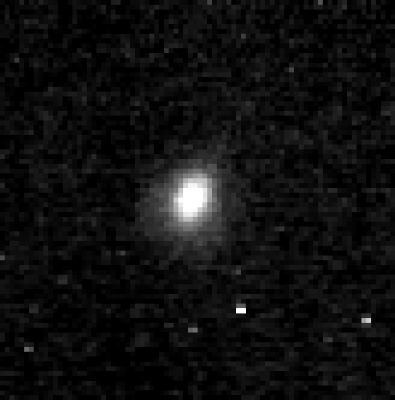
(278361) 2007 JJ43 is an asteroid[1]. (278361) 2007 JJ43 ranks in the top 2% of asteroid entities by monthly Wikipedia readership (164 views/month).[2]
Key Facts
- Discoverer or inventor: Palomar Observatory[3]
- Instance of: possible dwarf planet[4], trans-Neptunian object[5]
- Site of astronomical discovery: Palomar Observatory[6]
- Minor planet group: trans-Neptunian object[7]
- Parent astronomical body: Sun[8]
- Provisional designation: 2007 JJ43[9]
- Time of discovery or invention: May 14, 2007[10]
- Orbital eccentricity: 0.160[11], 0.1549178574678302[12]
- Absolute magnitude: 4.49[13]
- Orbital inclination: 12.0623 degree[14], 12.09065591345726 degree[15]
- Orbital period: 120379.0704114027 day[16]
- Rotation period: 6.04 hour[17]
- Longitude of ascending node: 272.505 degree[18], 272.502568341792 degree[19]
- Semi-major axis of an orbit: 48.4335712 astronomical unit[20], 47.71281486548155 astronomical unit[21]
- Apoapsis: 55.10438191820119 astronomical unit[22]
- Periapsis: 40.32124781276191 astronomical unit[23]
- Argument of periapsis: 6.75 degree[24], 8.37731772956345 degree[25]
- Mean anomaly: 338.057 degree[26], 347.3734889192361 degree[27]
- Albedo: 0.13[28]
- Epoch: November 21, 2025[29]
- Time of periapsis: 2465222.6324067824 Julian day[30]
Why It Matters
(278361) 2007 JJ43 has Wikipedia articles in 13 language editions, a strong signal of global cultural recognition.[31] (278361) 2007 JJ43 is known by 7 alternative names across languages and contexts.[32]