
Knut Hamsun
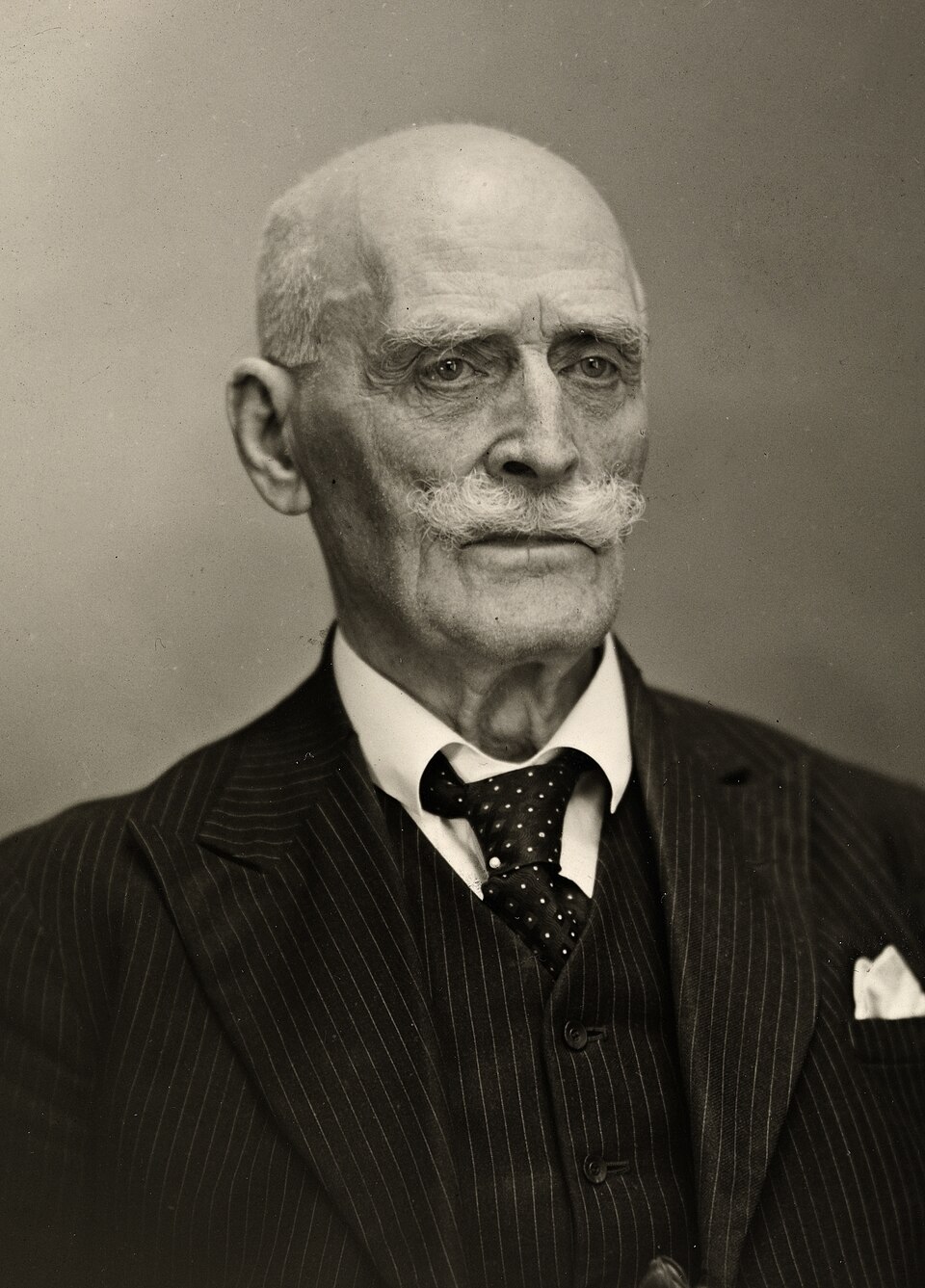
0 sources
Knut Hamsun was born on August 4, 1859, in Vågå[1][2][3][4][5][6][7][8][9][10][11][12][13][14][15][16] and died on February 19, 1952, in Grimstad[1][17][2][3][4][5][6][7][8][9][10][11][12][13][14][15]. A citizen of Norway[18], he is buried at Nørholm[19].
He worked as a writer, poet, novelist, playwright, critic, and writer[14]. Hamsun was associated with the Neo-romanticism movement and received the Nobel Prize in Literature and the Goethe Medal for Art and Science[20][21].
He married Marie Hamsun from 1909 until his death in 1952 and had previously been married to Bergljot Bech from 1898 to 1906.
Knut Hamsun
Summary
Knut Hamsun is a human[1]. Born in Vågå[2], he… he was born on August 4, 1859[3]. He passed away in Grimstad[4]. He died on February 19, 1952[5]. He worked as a writer[6], poet[7], novelist[8], playwright[9], and critic[10]. He ranks in the top 0.68% of human entities by monthly Wikipedia readership (3,209 views/month, #6,778 of 1,000,298).[11]
Key Facts
- Born in Vågå[2], Knut Hamsun…
- Knut Hamsun was born in Lom Municipality[12].
- Knut Hamsun passed away in Grimstad[4].
- Knut Hamsun was born on August 4, 1859[3].
- Knut Hamsun died on February 19, 1952[5].
- Knut Hamsun is buried at Nørholm[13].
- Among Knut Hamsun's spouses was Marie Hamsun[14].
- Knut Hamsun was married to Bergljot Bech[15].
- A child of Knut Hamsun was Arild Hamsun[16].
- A child of Knut Hamsun was Ellinor Hamsun[17].
- A child of Knut Hamsun was Tore Hamsun[18].
- A child of Knut Hamsun was Victoria Hamsun Charlesson[19].
- Knut Hamsun held citizenship in Norway[20].
- Knut Hamsun's professions included writer[6].
- Knut Hamsun's professions included poet[7].
- Knut Hamsun worked as a novelist[8].
- Knut Hamsun's professions included playwright[9].
- Knut Hamsun's professions included critic[10].
- Knut Hamsun worked as a writer[21].
- A notable work attributed to Knut Hamsun is Hunger[22].
- A notable work attributed to Knut Hamsun is Growth of the Soil[23].
- Knut Hamsun received the Nobel Prize in Literature[24].
- Knut Hamsun received the Goethe Medal for Art and Science[25].
- Knut Hamsun was influenced by Arthur Schopenhauer[26].
- Knut Hamsun was influenced by Bjørnstjerne Bjørnson[27].
Body
Origins and Family
Recorded place of birth include Vågå[2], a municipality of Norway[28], in Norway[29], founded in 1838[30] and Lom Municipality[12], a municipality of Norway[31], in Norway[32], founded in 1838[33]. Knut Hamsun was born on August 4, 1859[3].
Career and Affiliations
Recorded occupations include writer[6], poet[7], novelist[8], playwright[9], and critic[10].
Works and Contributions
Notable works include Hunger[22], a literary work[34] and Growth of the Soil[23], a literary work[35]. Things named for Knut Hamsun include Knut Hamsun Centre[36] and Hamsun[37].
Recognition
Awards received include Nobel Prize in Literature[24], a literary award[38], in Sweden[39], founded in 1901[40] and Goethe Medal for Art and Science[25], an art prize[41], in Nazi Germany[42], founded in 1932[43].
Personal Life
Spouses include Marie Hamsun[14], an actor[44], 1881–1969[45], of Norway[46] and Bergljot Bech[15], 1873–1943[47], of Norway[48]. Children include Arild Hamsun[16], a writer[49], 1914–1988[50], of Norway[51]; Ellinor Hamsun[17], an actor[52], 1916–1987[53], of Norway[54]; Tore Hamsun[18], a painter[55], 1912–1995[56], of Norway[57]; and Victoria Hamsun Charlesson[19], 1902–1980[58], of Norway[59]. Knut Hamsun was affiliated with the Nasjonal Samling[60].
Death and Burial
Knut Hamsun died on February 19, 1952[5]. He passed away in Grimstad[4]. He is buried at Nørholm[13].
Why It Matters
Knut Hamsun ranks in the top 0.68% of human entities by monthly Wikipedia readership (3,209 views/month, #6,778 of 1,000,298).[11] He has Wikipedia articles in 30 language editions, a strong signal of global cultural recognition.[61] He is known by 30 alternative names across languages and contexts.[62]
He has been cited as an influence by Charles Bukowski[63], an actor[64], 1920–1994[65], of Germany[66]; Buddenbrooks[67], a literary work[68], founded in 1890[69], written by Thomas Mann[70]; and Johannes V. Jensen[71], a writer[72], 1873–1950[73], of Kingdom of Denmark[74], awarded the Nobel Prize in Literature[75].
Works attributed to him include Hunger[76], a literary work[77]; Growth of the Soil[78], a literary work[79]; Victoria[80], a literary work[81]; Benoni[82], a literary work[83]; On Overgrown Paths[84], a written work[85]; and Mysteries[86]. Entities named for him include Knut Hamsun Centre[36] and Hamsun[37].
FAQs
Where was Knut Hamsun born?
Born in Vågå[2], Knut Hamsun…
Where did Knut Hamsun die?
Knut Hamsun died in Grimstad[4].
Who was Knut Hamsun married to?
Knut Hamsun's spouses include Marie Hamsun[14] and Bergljot Bech[15].
What did Knut Hamsun do for work?
Knut Hamsun worked as writer[6], poet[7], novelist[8], playwright[9], and critic[10].
What awards did Knut Hamsun receive?
Honors received include Nobel Prize in Literature[24] and Goethe Medal for Art and Science[25].
Who did Knut Hamsun influence?
Knut Hamsun has been cited as an influence by Charles Bukowski[63], Buddenbrooks[67], and Johannes V. Jensen[71].