
Anders Celsius
0 sources
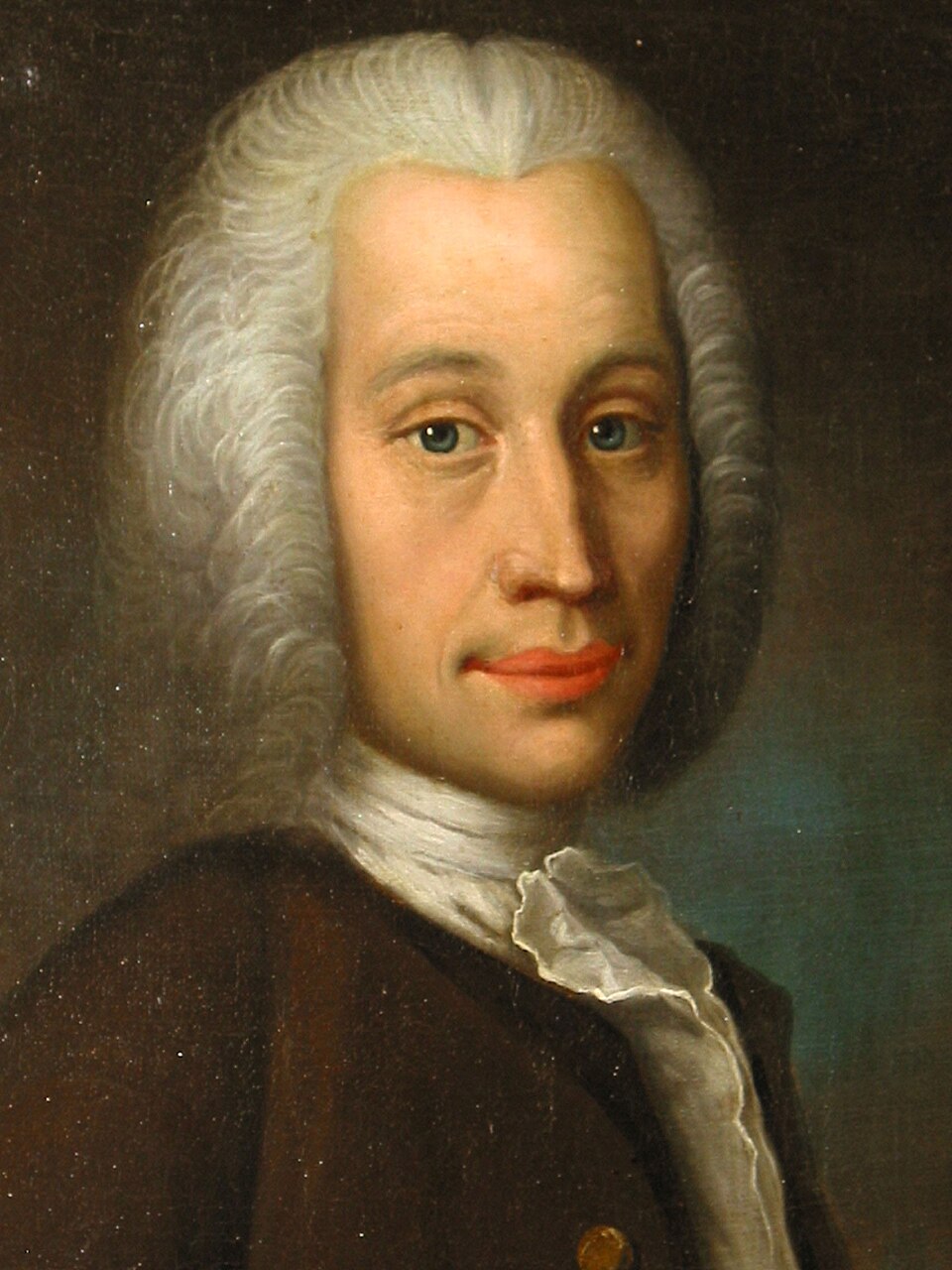
Anders Celsius was born on November 27, 1701, in Uppsala, Sweden [1][2][3][4][5][6][7][8][9]. He studied at Uppsala University [10][8] and pursued careers as an astronomer, physicist, mathematician, university teacher, inventor, and chemist [2]. Celsius worked at Uppsala University from 1728 to 1732 and again from 1738 to 1744, with an intervening period at the French Academy of Sciences between 1735 and 1737 [8]. His primary field of study was astronomy , and he was recognized as a Fellow of the Royal Society [11].
Celsius is best known for developing the Celsius temperature scale [8]. He briefly served as Rector of the University of Uppsala in 1739 and again in 1743 . His career was cut short by tuberculosis, which led to his death on April 25, 1744, in Uppsala [1][2][3][4][5][12][8][13]. He was buried at Old Uppsala Church .
Anders Celsius
Summary
Anders Celsius is a human[1]. Born in Uppsala[2], he… he was born on November 27, 1701[3]. He died in Uppsala[4]. He died on April 25, 1744[5]. He worked as an astronomer[6], physicist[7], mathematician[8], university teacher[9], and inventor[10]. He has Wikipedia articles in 30 language editions, a strong signal of global cultural recognition.[11]
Key Facts
- Anders Celsius's place of birth was Uppsala[2].
- Anders Celsius passed away in Uppsala[4].
- Anders Celsius died in Uppsala Cathedral Assembly[12].
- Anders Celsius was born on November 27, 1701[3].
- Anders Celsius was born on November 11, 1701[13].
- Anders Celsius died on April 25, 1744[5].
- Anders Celsius is buried at Old Uppsala Church[14].
- Anders Celsius's father was Nils Celsius[15].
- Anders Celsius held citizenship in Sweden[16].
- Anders Celsius worked as an astronomer[6].
- Anders Celsius's professions included physicist[7].
- Anders Celsius's professions included mathematician[8].
- Anders Celsius worked as a university teacher[9].
- Anders Celsius's professions included inventor[10].
- Anders Celsius worked as a chemist[17].
- Anders Celsius's field of work was astronomy[18].
- Anders Celsius held the position of Rector of the University of Uppsala[19].
- Anders Celsius held the position of Rector of the University of Uppsala[20].
- Anders Celsius was employed by Uppsala University[21].
- Among Anders Celsius's employers was French Academy of Sciences[22].
- Among Anders Celsius's employers was Uppsala University[23].
- Anders Celsius's education included a stint at Uppsala University[24].
- Anders Celsius's doctoral advisor was Eric Burman[25].
- A notable student of Anders Celsius was Johan Gottschalk Wallerius[26].
- A notable work attributed to Anders Celsius is Celsius temperature scale[27].
Body
Origins and Family
Born in Uppsala[2], Anders Celsius… Recorded date of birth include November 27, 1701[3] and November 11, 1701[13]. His father was Nils Celsius[15].
Education
Anders Celsius's education included a stint at Uppsala University[24]. His doctoral advisor was Eric Burman[25].
Career and Affiliations
Recorded occupations include astronomer[6], physicist[7], mathematician[8], university teacher[9], inventor[10], and chemist[17]. Anders Celsius's field of work was astronomy[18]. Employers include Uppsala University[21], a university[28], in Sweden[29], founded in 1477[30], headquartered in Uppsala[31] and French Academy of Sciences[22], an academy of sciences[32], in France[33], founded in 1666[34], headquartered in Paris[35]. Positions held include Rector of the University of Uppsala[19]. A notable student of him was Johan Gottschalk Wallerius[26]. Doctoral students include Jakob Gadolin[36], a philosopher[37], 1719–1802[38], of Sweden[39], awarded the Knight of the Order of the Polar Star[40] and Pehr Wilhelm Wargentin[41], an astronomer[42], 1717–1783[43], of Sweden[44], awarded the Fellow of the Royal Society[45].
Works and Contributions
A notable work attributed to Anders Celsius is Celsius temperature scale[27]. Things named for him include degree Celsius[46], a SI derived unit[47]; celsian[48], a mineral species[49]; and Celsius[50], a lunar crater[51].
Recognition
Anders Celsius received the Fellow of the Royal Society[52].
Death and Burial
Anders Celsius died on April 25, 1744[5]. Recorded place of death include Uppsala[4], an urban area in Sweden[53], in Sweden[54] and Uppsala Cathedral Assembly[12], a parish of the Church of Sweden[55], in Sweden[56], founded in 1550[57]. The cause of death was tuberculosis[58]. Burial took place at Old Uppsala Church[14].
Why It Matters
Anders Celsius has Wikipedia articles in 30 language editions, a strong signal of global cultural recognition.[11] He is known by 19 alternative names across languages and contexts.[59]
Entities named for him include degree Celsius[46], a SI derived unit[47]; celsian[48], a mineral species[49]; and Celsius[50], a lunar crater[51].
His notable doctoral advisees include Jakob Gadolin[60], a philosopher[61], 1719–1802[62], of Sweden[63], awarded the Knight of the Order of the Polar Star[64] and Pehr Wilhelm Wargentin[65], an astronomer[66], 1717–1783[67], of Sweden[68], awarded the Fellow of the Royal Society[69].
FAQs
Where was Anders Celsius born?
Anders Celsius was born in Uppsala[2].
Where did Anders Celsius die?
Anders Celsius died in Uppsala[4].
Who were Anders Celsius's parents?
Anders Celsius's father was Nils Celsius[15].
What did Anders Celsius do for work?
Anders Celsius worked as astronomer[6], physicist[7], mathematician[8], university teacher[9], and inventor[10].
Where did Anders Celsius go to school?
Anders Celsius was educated at Uppsala University[24].
What awards did Anders Celsius receive?
Honors received include Fellow of the Royal Society[52].